BIKZ.DEV — FLAGSHIP CASE No. 12 CODEDALA · 2026 NEXT.JS + NODE.JS + FLUTTER · BILINGUAL EDTECH CODE. IN YOUR LANGUAGE. · AI-ASSISTED BUILD +7 775 878 17 32 BIKZ.DEV — FLAGSHIP CASE No. 12 CODEDALA · 2026
Flagship · Case No. 12
2026
Web · Mobile · Live at codedala.kz
FLAGSHIP AI-ASSISTED BUILD

CODEDALA

A bilingual software-development education platform — courses, interactive lessons with a real in-browser code editor and a sandboxed runtime, career roadmaps, achievements, and a Flutter mobile companion for quizzes and tests on completed topics. Native Kazakh and Russian at every layer of content. Live at codedala.kz.

EdTech · Coding Web + Mobile 2026
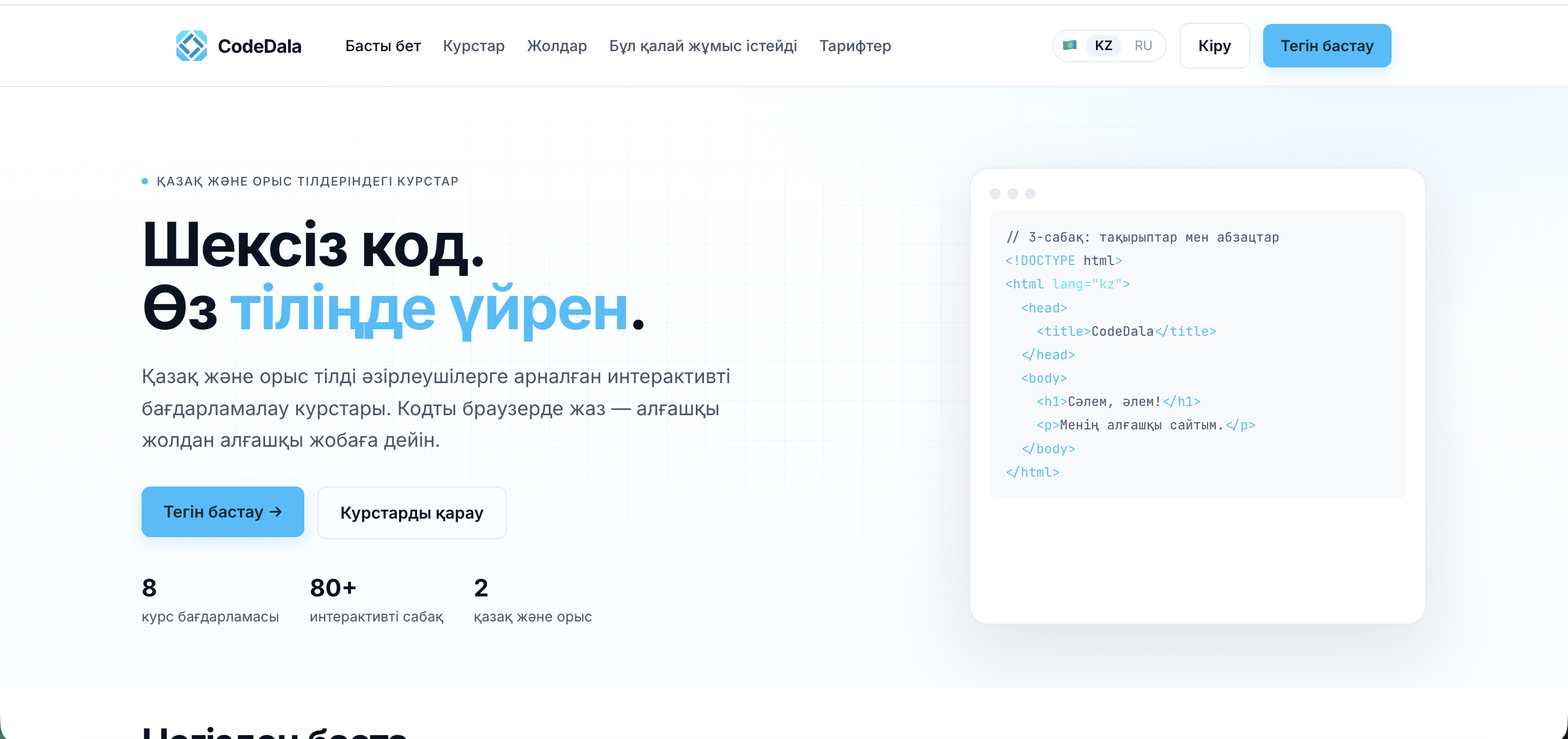
codedala.kz home — KZ headline ‘Шексіз код. Өз тіліңде үйрен.’ next to a code-editor preview showing bilingual HTML with a Kazakh greeting
Year
2026
Length
10 wk
Scale
80+ lessons
Status
Live
01

About the project

// 4 min read

A Kazakh-speaking teenager who wants to learn to code today opens a Russian-language platform, runs every error message through a translator, and gets used to the friction. CodeDala's pitch is the obvious one: teach coding in Kazakh. Not Russian-with-a-language-toggle — lessons, quiz copy, error explanations, and the help text inside the code editor all authored in Kazakh from the first commit, with parallel Russian for the audience that prefers it. The headline on the home page reads "Шексіз код. Өз тіліңде үйрен." — endless code, learn in your own language. We built it as a Next.js web platform, a Node.js back end, and a Flutter companion app.

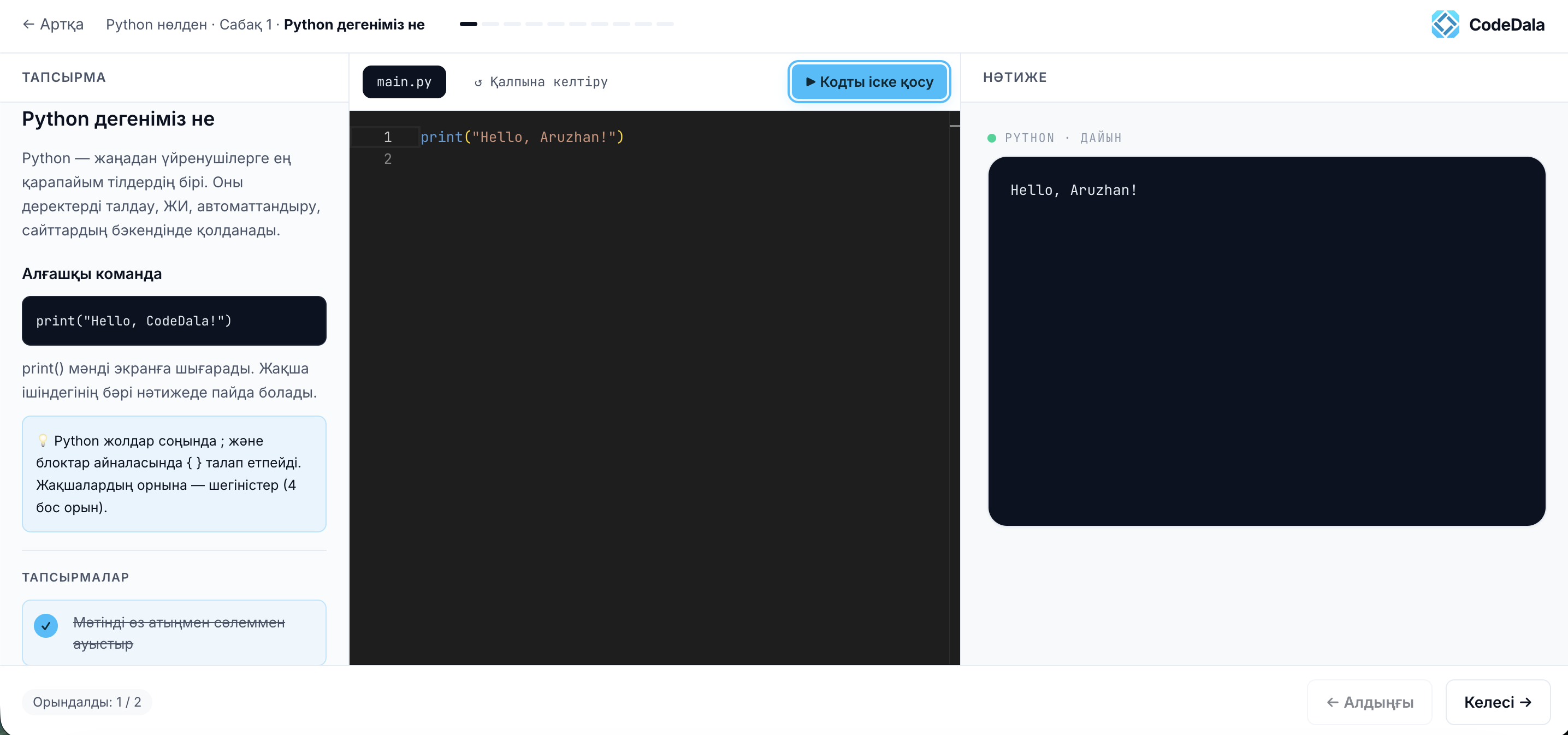
CodeDala lesson module — three-pane layout: task description and checklist on the left in Kazakh, in-browser Monaco code editor in the middle showing main.py with print(‘Hello, Aruzhan!’), terminal output panel on the right showing the executed result in green
01Lesson module — Kazakh task on the left, Monaco editor, sandboxed runtime output on the right

The lesson is a three-pane workspace. The left rail carries the task — explanation in Kazakh, a worked example, hints, and a checklist of acceptance steps that the runner verifies as the student edits the code. The middle is a Monaco editor with syntax highlighting, multi-file tabs, a Reset button that snaps back to the starting code, and a Run button that ships the buffer to a sandboxed Node.js runner. The right pane is the terminal output — colour-coded language status (Python · Ready, then the captured stdout) with the last run's result preserved so the student can iterate on the code while reading the output. When all checklist items pass, the bottom-right Next button lights up.

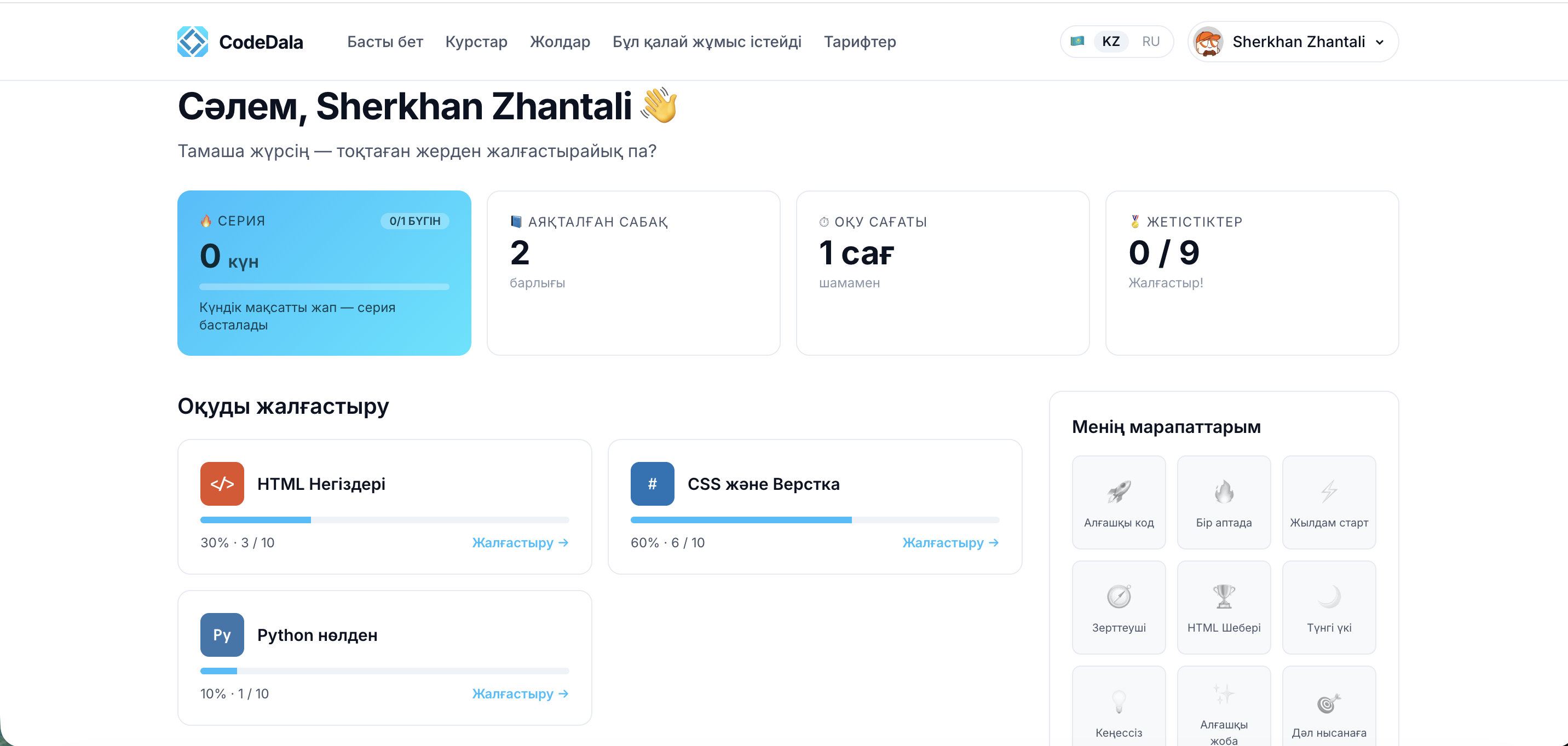
CodeDala logged-in dashboard — ‘Сәлем, Sherkhan Zhantali’ greeting, four stat cards (Series 0 days, Completed lessons 2, Study hours 1, Achievements 0/9), three in-progress course cards (HTML Negizderi 30%, CSS jane Verstka 60%, Python from zero 10%) with Continue buttons, achievement badge rail on the right
02Dashboard — streak, completed lessons, study hours, achievements and continue-where-you-left-off rails

The dashboard is built around the rhythm of an active learner — a daily streak tile, a count of completed lessons, hours-on-platform, and a 9-slot achievement grid that unlocks as students hit milestones (first commit, first array, first deploy). The "continue learning" rail brings up the active courses with their precise progress, so a student returning after a week lands on the next unfinished lesson without searching. The course catalog itself is composed of self-contained modules, but…

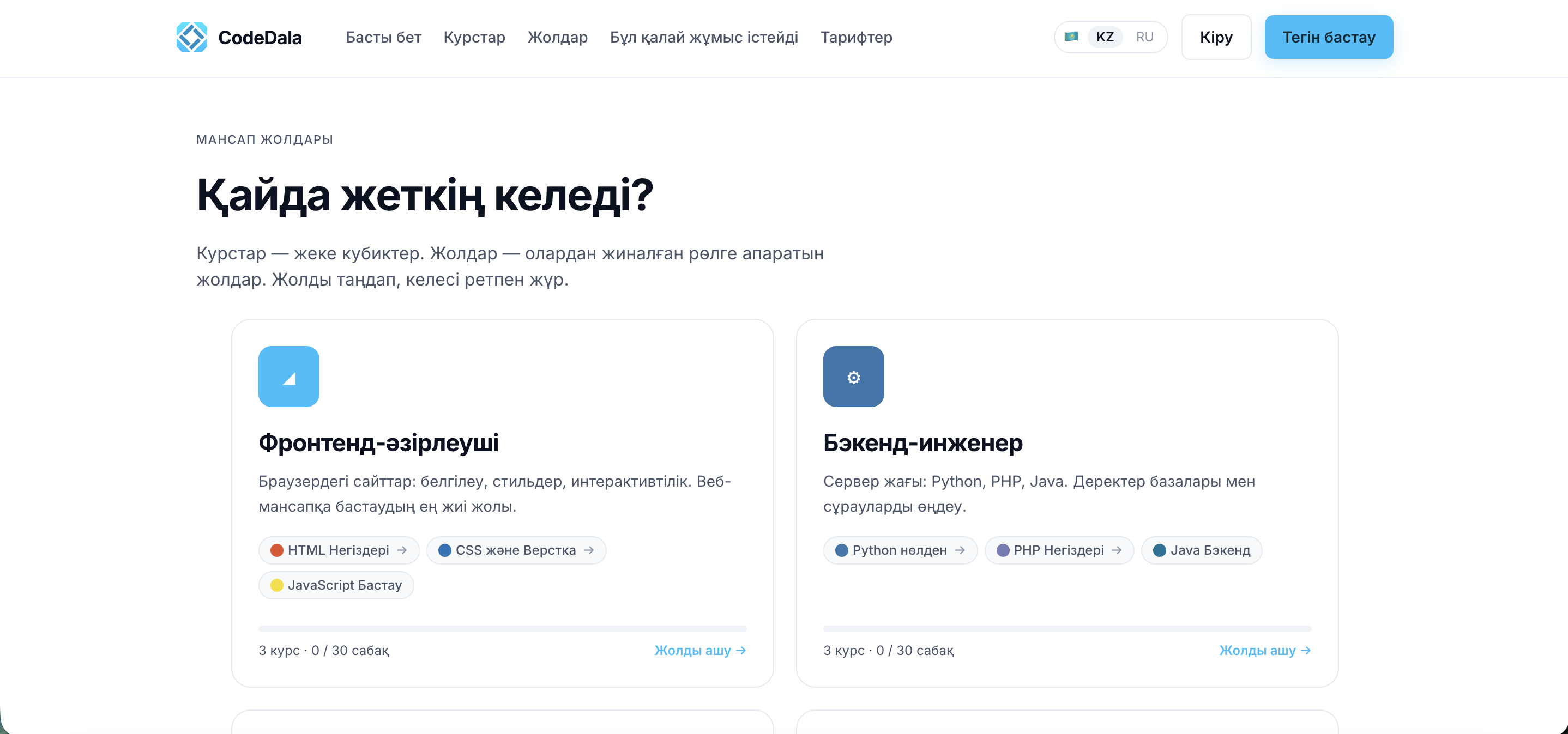
CodeDala career roadmaps — ‘Қайда жеткің келеді?’ heading with two role cards: Frontend developer (3 courses · 0/30 lessons, HTML Negizderi, CSS jane Verstka, JavaScript Bastau) and Backend engineer (3 courses · 0/30 lessons, Python from zero, PHP Negizderi, Java Backend), each with an Open Path link
03Roadmaps — courses are atoms, paths are the role-shaped routes through them

…the platform's bigger frame is the roadmap. "Курстар — жеке кубиктер. Жолдар — олардан жиналған рөлге апаратын жолдар." Courses are individual cubes; roadmaps are paths assembled from them, leading to a role. A Frontend track strings together HTML, CSS and JavaScript modules; a Backend track wires Python, PHP and Java fundamentals. The roadmap surface frames the question every learner actually has — "where am I trying to get to?" — instead of just listing courses by topic.

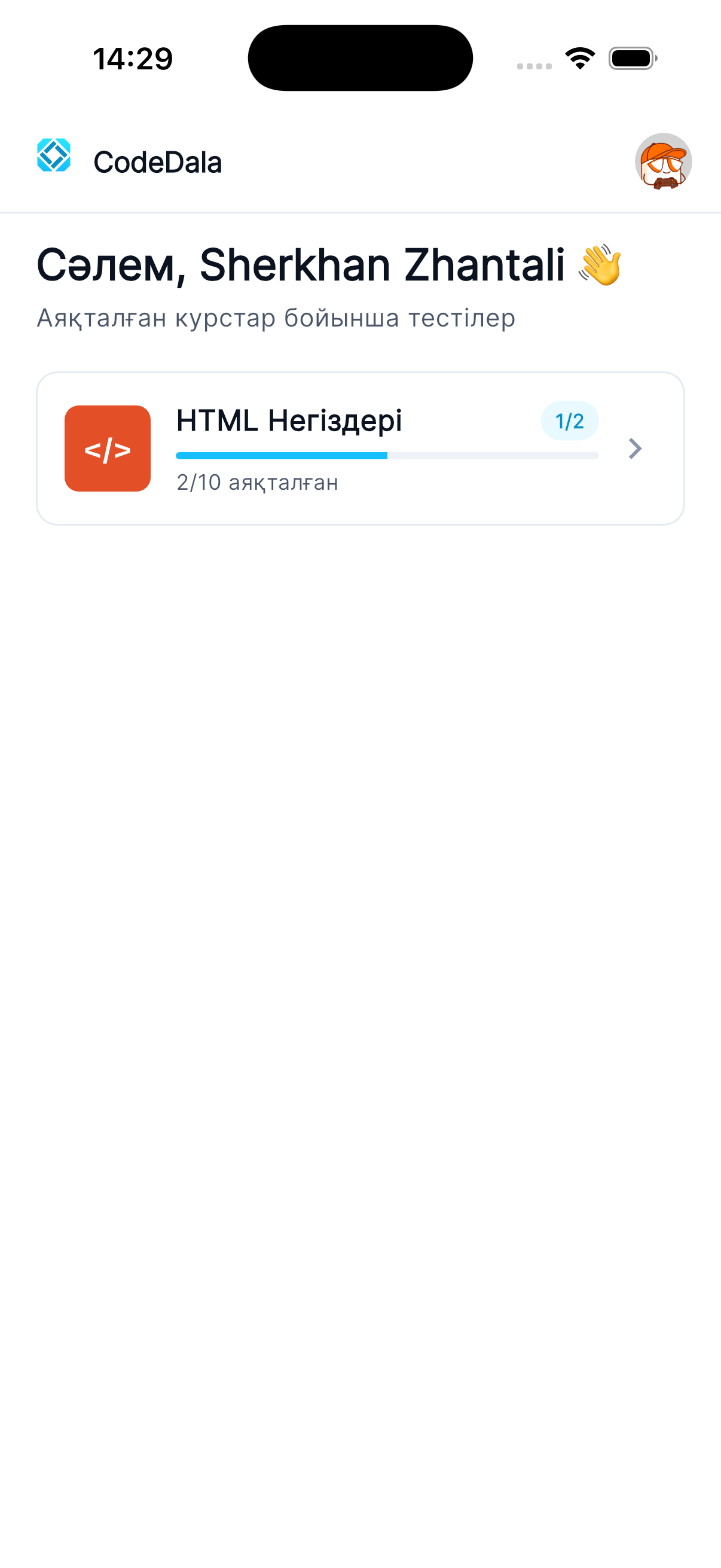
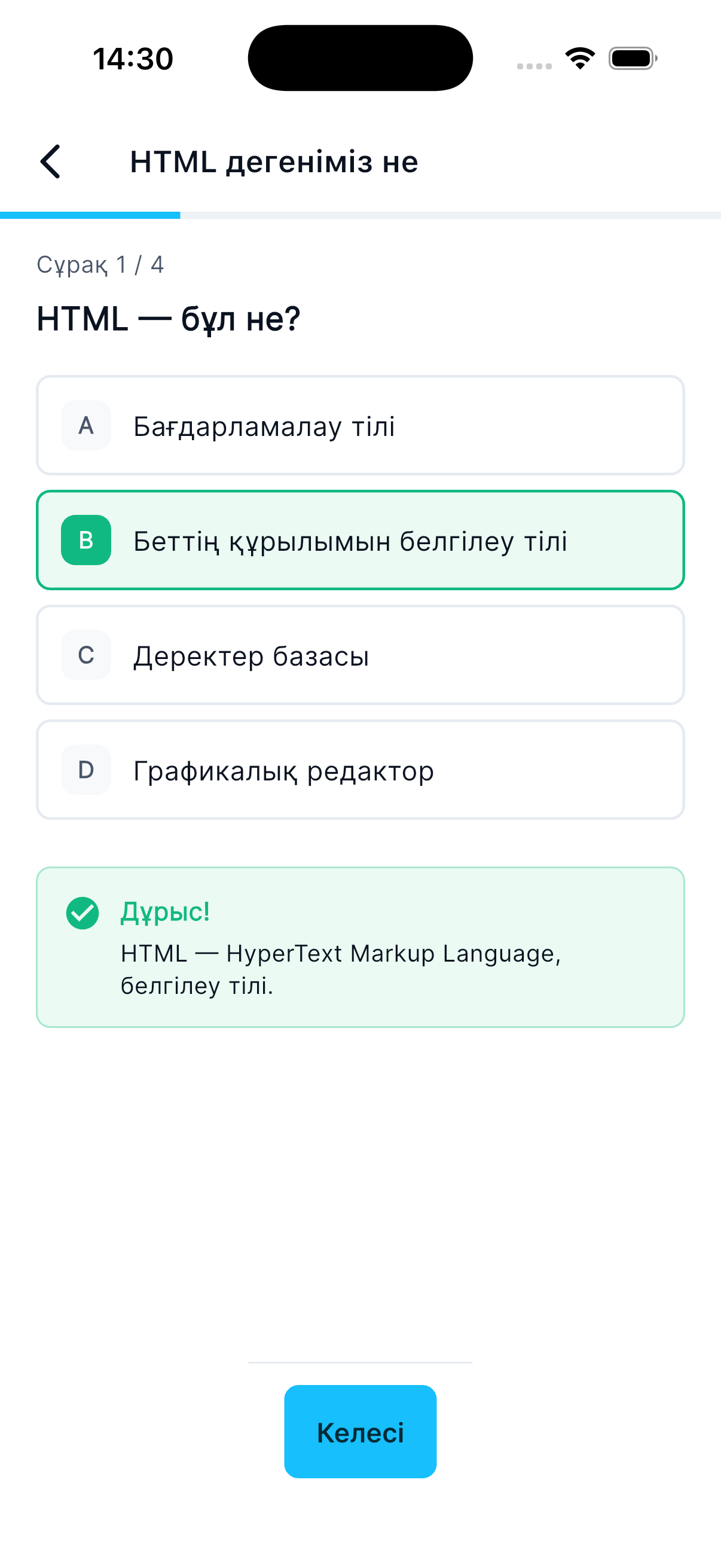
The Flutter mobile app is a companion, not a duplicate of the web. It targets the moments between desk sessions: students who finished a lesson on the laptop pull out the phone on the bus and hammer through the quiz on what they just learned. The home shows the courses they have completed lessons for; opening a course drops them straight into a 4-question multiple-choice run, with green pass-state explanations on correct answers and a brief why-this-was-wrong on misses. The same Node.js back end serves both surfaces, so progress flows in either direction without a sync ritual.

CodeDala mobile home — Кazakh greeting ‘Сәлем, Sherkhan Zhantali’, subtitle ‘Аяқталған курстар бойынша тестілер’ (Tests on completed courses), one course card showing HTML Negizderi at 1/2 with a 2/10 progress bar
04Mobile — courses unlocked for testing once their lessons are completed on the web
CodeDala mobile quiz — ‘HTML дегеніміз не’ topic, question 1/4 ‘HTML — бұл не?’ with four options A/B/C/D, option B selected and outlined green (correct: ‘Беттің құрылымын белгілеу тілі’), Дұрыс! feedback box with explanation, Келесі button at the bottom
05Quiz — multiple choice with green correct-answer feedback and a one-line explanation

The platform was built with AI as a co-author, not as a wrapper. Lesson scaffolds — task copy, hint ladders, the worked-example code, and a curated set of "common wrong answers" with one-sentence why-they're-wrong notes — were drafted by a model and then passed through a human editorial layer. The same pipeline produced the parallel Kazakh and Russian translations of every lesson body, with the in-Kazakh copy reviewed end-to-end by a native Kazakh-speaking teacher. The error explanations a student sees inside the editor are not stock "syntax error" messages — they're plain-language hints generated against the actual error and the lesson context. The model is a tool inside the build, not a feature on top of it.

02

Stack

// what we shipped on
Next.js React TypeScript Tailwind Monaco editor Node.js Express PostgreSQL Redis Flutter Dart Sandboxed runtime OpenAI API Vercel App Store Google Play
Next case · No. 13 · 2026

KOLESA BOT.

← Previous: Miami Condo Analytics