BIKZ.DEV — INTERNATIONAL CASE No. 14 KNIFEAID · 2022 REACT FRONTEND · MODULES + CONSULTING FOR A US KNIFE-SHARPENING SERVICE +7 775 878 17 32 BIKZ.DEV — INTERNATIONAL CASE No. 14 KNIFEAID · 2022
Case · No. 14
2022
Web · React modules · Consulting
USA · INTERNATIONAL

KNIFEAID.

A focused frontend engagement for Knifeaid, a US knife-sharpening service. We delivered several React modules into their existing application — built alongside the in-house engineering team — and acted as architecture and code-review consultants on the rest of the build. Embedded enough to move the work; boundaried enough to leave clean code behind.

Frontend modules · Consulting Web · React 2022
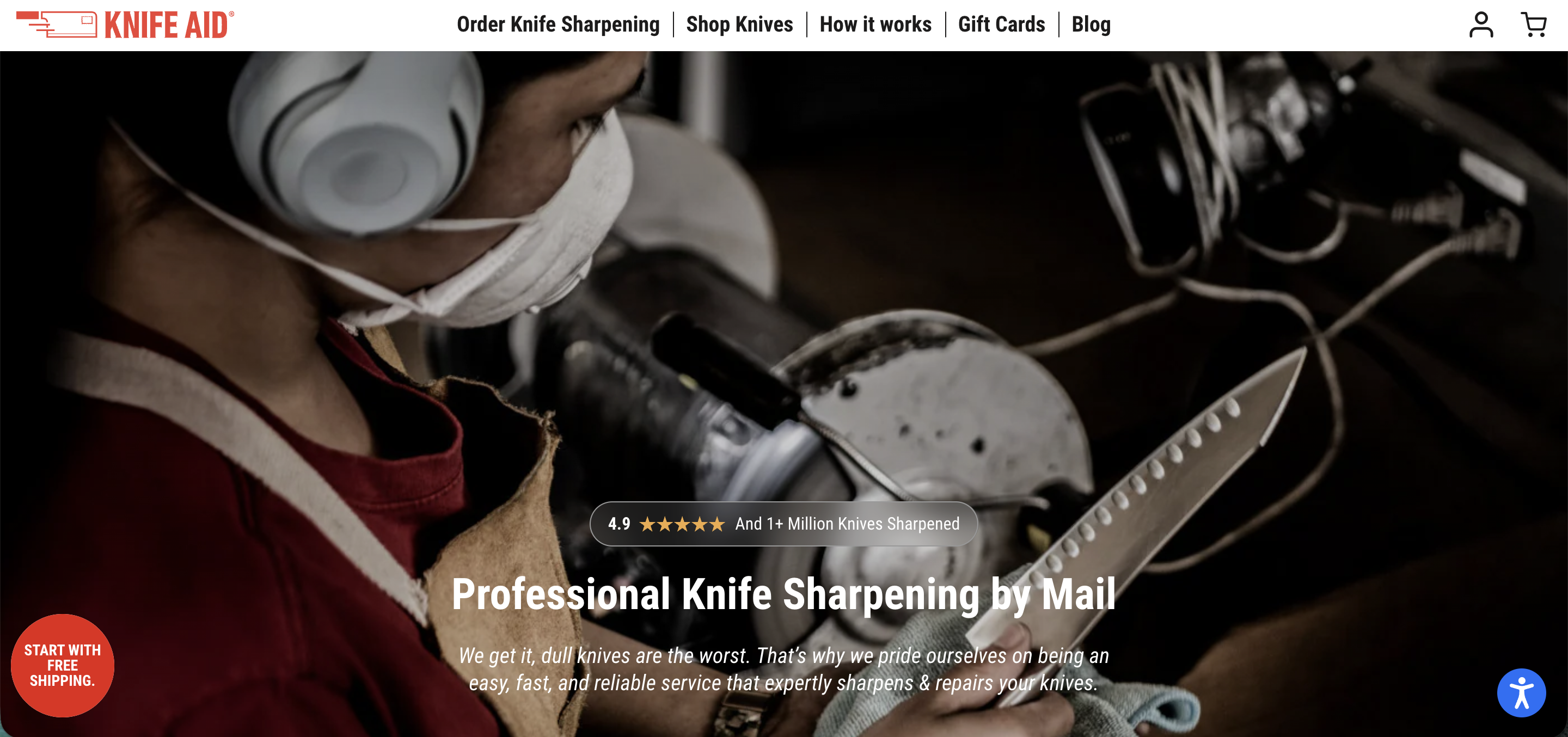
Knife Aid homepage — Professional Knife Sharpening by Mail headline, sharpening artisan in PPE working a blade on a grinder, 4.9-star rating with 1+ million knives sharpened
Year
2022
Length
2 wk
Scale
Several modules
Status
Live
01

About the project

// 3 min read

Knifeaid runs a mail-in knife-sharpening service in the United States — customers pack their knives, ship them out, get them back surgically sharp. The service is mature; what they needed was acceleration on specific frontend modules, not a full rebuild. We came in as a sharp pair of React hands plus an outside set of eyes on the broader architecture.

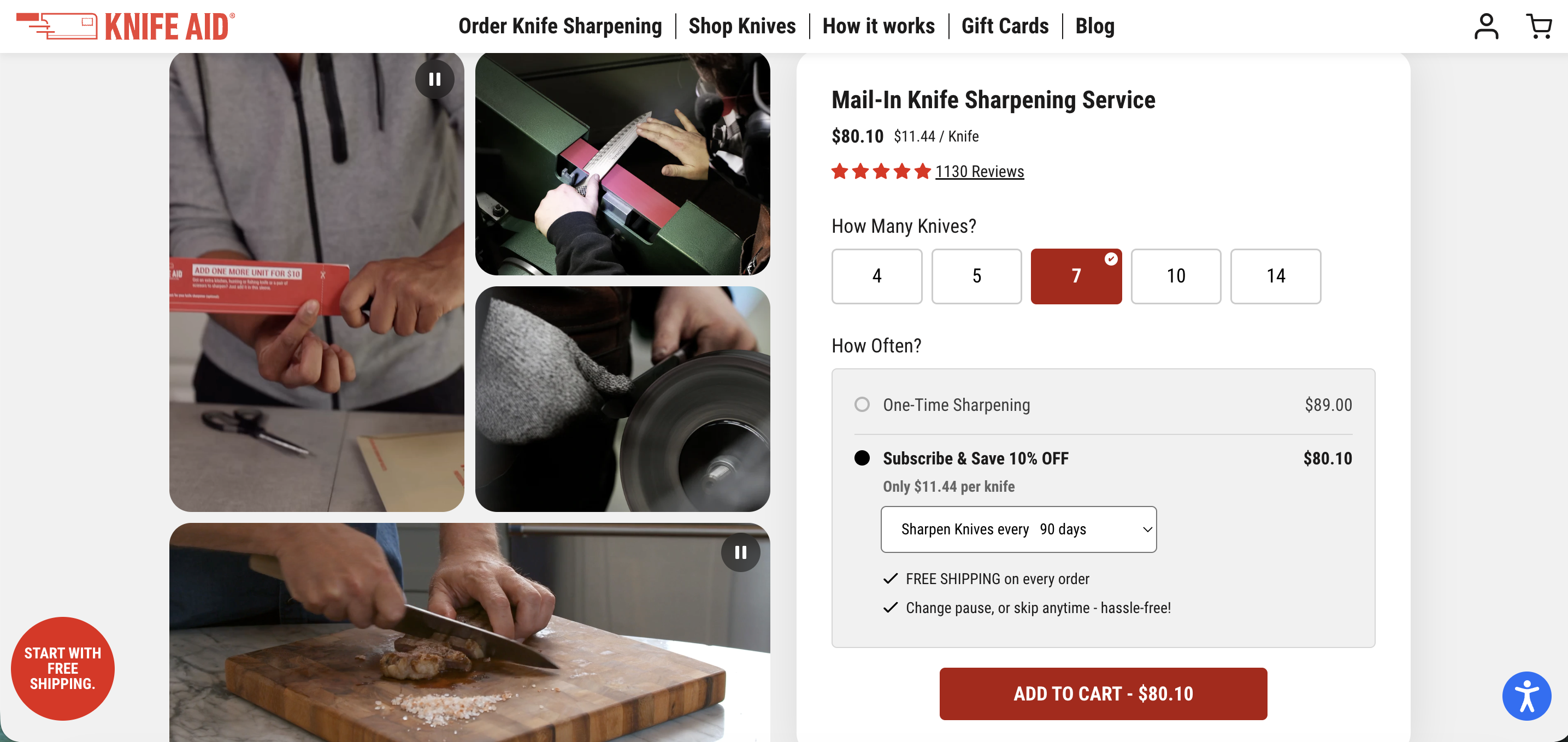
Mail-In Knife Sharpening Service order builder — knife-count selector (4, 5, 7, 10, 14), one-time vs Subscribe & Save 10% pricing tiers, frequency picker, dynamic price recalculation, Add to Cart button
01Order builder module — knife-count, subscription cadence, dynamic pricing, add-to-cart

The collaboration was scoped as a series of frontend modules. Their team owned the application; we owned a defined surface area inside it — a feature, then another feature, each one merged through the in-house review process. In parallel we sat in on architecture conversations: state-management patterns, component decomposition, where to draw the line between local component state and the shared store. Less "agency build," more contract senior engineer who shows up with code and an opinion.

React was the through-line — TypeScript, hooks, a typed-store pattern they were standardising on. We pushed for explicit boundaries between the modules we delivered and the rest of the codebase: each module shipped as its own folder, its own slice of state, its own typed contract with the rest of the app. The result is a set of features that read as a single cohesive frontend, but that the in-house team can pull apart and rework independently of each other when they need to.

Several modules went live across the engagement; the in-house team continued the rest of the work on the same patterns we built together. The model is one we like running — embedded enough to actually move the work, but boundaried enough that we leave clean code behind, not a dependency the client now has to manage.

02

Stack

// what we shipped on
React TypeScript React Hooks Redux Toolkit React Router REST API Storybook Jest ESLint GitHub PRs
Next case · No. 01 · 2024

SMARTSTROI.

← Previous: Kolesa Bot