Online visitation for people held in closed institutions in Kazakhstan — pre-trial detention centres and military units. Families get an ordinary mobile app (Android and iOS) for text, voice messages and video calls; inside the facility the other side runs on a locked-down kiosk terminal. Two worlds that talk to each other, inside a controlled perimeter.
Closed-institution commsMobile + Terminal2026
Year
2026
Length
7 mo
Scale
3 modules
Status
Live
01
About the project
// 5 min read
A visit to someone in a pre-trial detention centre or a military unit is almost always a drive of hundreds of kilometres, a queue, and fifteen minutes through glass. When a close person ends up inside a closed institution, staying in touch turns into a logistics problem: visits are capped in number and length, you have to travel — often to another city — take time off work, and stand in line.
There's a separate story around defence lawyers and investigators. To discuss a case with their client, a lawyer has to physically travel to the facility and be given a room for the meeting. An investigator has to arrange transport or go out to the site in person. Every one of these meetings is hours of travel and approvals. We took on the task of moving part of this communication online — so that it works inside a closed institution, not "like a regular messenger someone carried in there."
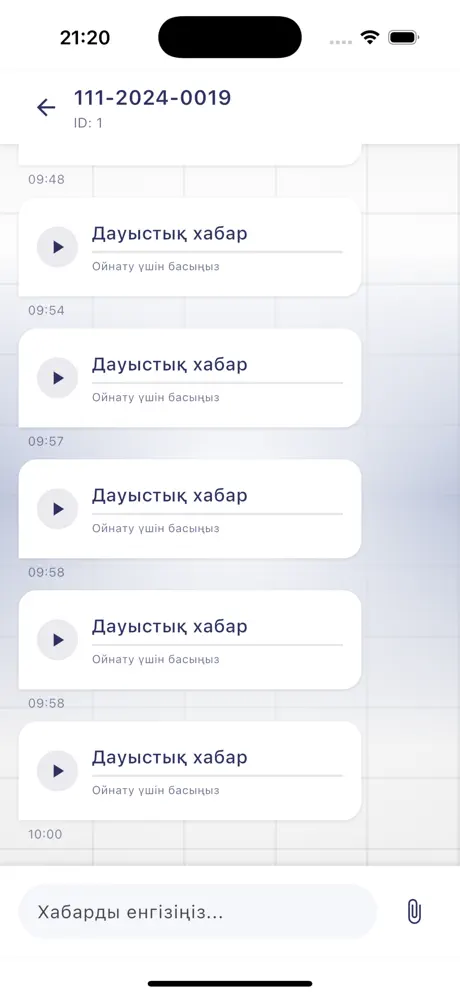
The system has two halves. For relatives it's an ordinary mobile app — Android and iOS — with text messages, voice messages and video calls to their person; in feel it's closest to a familiar messenger, except the other end is someone inside a closed institution. On the facility side, the conversation runs not from a personal phone but from a special secured terminal — a device in kiosk mode that can't reach the open internet, install third-party apps, or do anything outside the permitted scenario. That split is the point: in a closed institution you can't just hand out smartphones — you need a controlled perimeter where every exchange follows set rules.
01Family app — a familiar chat with a person inside: text, voice messages and video calls
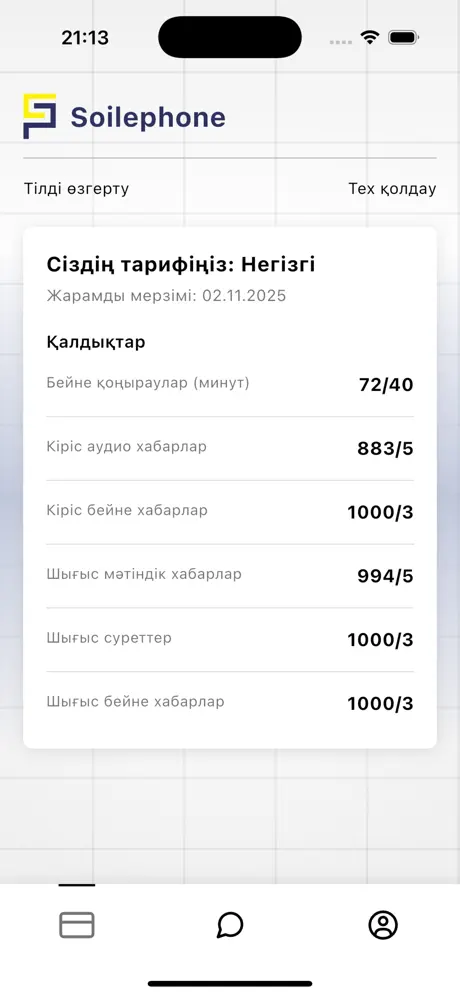
For a relative it's simple: install the app, top up the balance, talk. A video call replaces the trip — you can see each other without leaving home or bending your day around visiting hours. The economics are deliberately one-sided: the relative pays, buying a tariff that the conversation draws down. For the person inside, the connection is free — they need no money and no bank card. The whole payment loop is pushed outward, onto the family's side, on purpose.
02Tariffs and balance — the relative buys a plan; every minute and message draws down from it
The separate — and, to our mind, most important — scenario is professional communication. A lawyer can hold a meeting with their client remotely, without spending a day driving to the facility and back. An investigator can carry out the necessary procedural steps online, where that's permissible. For an overloaded system this is a real saving of everyone's time, and for the person inside it's faster access to their defence.
We're BIKZ.DEV, a development studio in Almaty. The task had no off-the-shelf answer — Zoom and ordinary messengers don't fit a closed institution, neither on control nor on usage scenarios. Four things had to be solved. Two apps for two roles: the family app is a full messenger — pushes, background states, in-app purchases, incoming-call handling — while the terminal is the opposite, a maximally locked device built for a single scenario; two different worlds that still have to talk. Video in non-standard conditions: the terminals are inexpensive hardware with weak processors, yet call quality and stability have to hold; a large share of the work went into making video run cleanly and without lag on exactly that equipment. Our own infrastructure: we stand up and keep the infrastructure under our control rather than handing sensitive communication over to external services wholesale. And billing and payments: tariffs, balances, purchases through Google Play and the App Store, and Kazakhstan's local payment systems — a whole separate layer that has to work flawlessly, because real family money sits behind it.
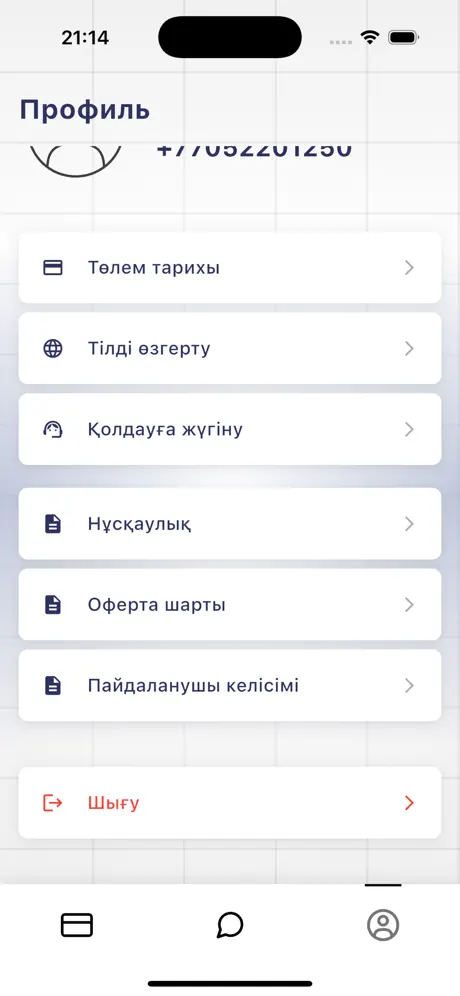
03Profile — payment history, language, support and the legal documents, all on the family side
The point isn't the technology. The point is that families now have a way to see their person more often, and lawyers and investigators can hold part of their meetings without losing days to the road. For closed institutions in Kazakhstan this is one of the first working examples where online visitation isn't an experiment but an everyday tool. We keep developing and refining the system.